
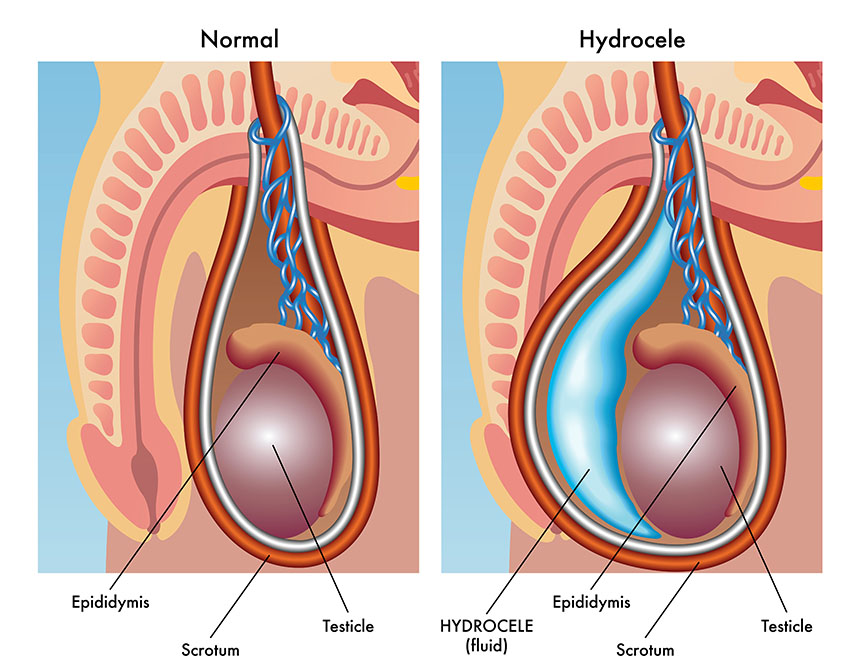
Hydrocele is a condition characterized by the accumulation of serous fluid within the layers of the scrotum, specifically within the tunica vaginalis. It can affect adults and children and may arise due to congenital or acquired factors. Let’s explore the causes, symptoms, and treatment options for hydrocele while offering insights into when to seek medical attention.
A hydrocele presents as painless swelling in the scrotum. While typically benign, it may cause discomfort or cosmetic concerns in some cases. Depending on the duration of the condition, it can range from mild enlargement to the size of a pomelo before patients seek help.
Can be primary (idiopathic) or secondary to:
Painless swelling in the scrotum.
Discomfort or heaviness in the scrotum in some cases.
Pain, if associated with infections, trauma, or other complications.
If you think you may be presenting symptoms of Hydrocele, schedule a consult as soon as possible.
A thorough examination is crucial to distinguish hydrocele from other conditions like inguinal hernia or testicular tumours.
Treatment depends on the severity and underlying cause of the hydrocele.
Seek medical evaluation if you notice:
Persistent or worsening scrotal swelling.
Pain or redness in the scrotum.
Symptoms suggestive of an underlying condition, such as fever or testicular abnormalities.
Hydrocele is a common and generally benign condition that can affect males of all ages. While many cases resolve, timely diagnosis and treatment are essential to rule out serious conditions like infections or tumors. If left for too long, infections can occur, and if the hydrocele grows to a significant size, it can affect your walking or sexual experience. If you or your child experiences symptoms of hydrocele, consult a healthcare provider for personalized care.
If you think you may be presenting symptoms of Hydrocele, schedule a consult as soon as possible.
Our friendly team at Urocare is looking forward to serving you.
For urgent enquiries and appointment requests, please call the clinic directly.
Please note that UroCare will be operating on a half day on 16th, and will be closed on 17th and 18th.
We will resume normal operating hours on 19th.
Thank you for your understanding.